
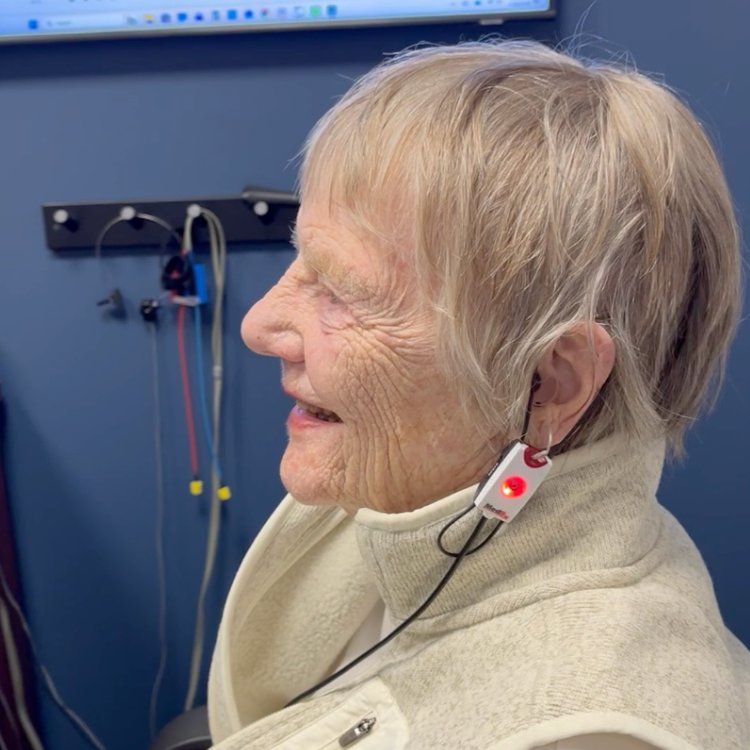
A small probe. A confirmed result.
Real Ear Measurement turns a programmed estimate into a confirmed result. Here is how the process works.
Probe placement
A thin, flexible probe microphone is placed in the ear canal alongside your hearing aid to measure the actual sound level reaching the eardrum.
Compare to target
The measured output is compared against your prescription target, showing exactly how much sound is reaching your ear and where adjustments are needed.
Verified result
The hearing aids are adjusted until the output matches your prescription. You leave with a fitting that is confirmed, not estimated.
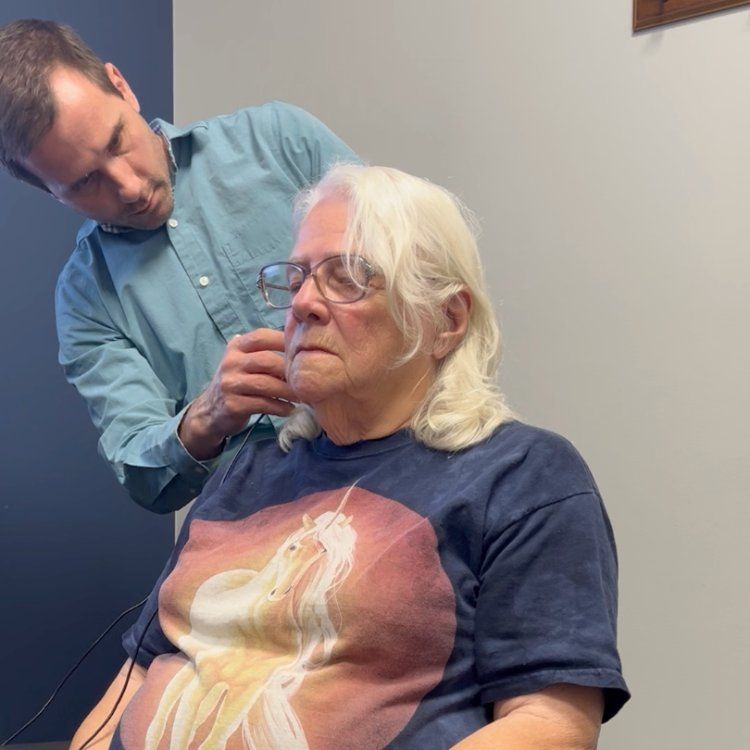
A hearing aid set by software alone is a guess.
Every ear canal is shaped differently, and that shape directly affects how much sound reaches the eardrum. Hearing aid software accounts for average anatomy, not yours. Real Ear Measurement places a probe microphone in the canal and measures what is actually happening at the eardrum, so the fitting is verified against your prescription rather than assumed to be close enough.
Without it, hearing aids frequently miss the target: patients end up underfitted and still struggling in noise, or overfitted and fatigued, often without knowing why. Despite being the clinical standard, most fittings in the United States skip this step. At North Shore Hearing, it is part of every fitting, not an add-on.
What verification adds to a fitting.
Real Ear Measurement is not a single test. It is a set of confirmations that turn a programmed starting point into a fitting you can trust.
- Verified output at the eardrum based on your actual ear canal, not an average anatomy estimate
- Confirmation that your aids are reaching the targets set by your hearing evaluation
- Identification of underfitting that leaves speech sounding muffled even after programming
- Detection of overfitting that causes loudness discomfort or listening fatigue over time
- A documented baseline that makes future adjustments and refittings more accurate and consistent
- The standard of care used by the VA and recommended by major audiology professional bodies
Most practices skip this step. We do not.
Real Ear Measurement requires additional equipment, additional time, and the training to interpret the results accurately. That is why surveys consistently find it absent from the majority of hearing aid fittings, including many performed by otherwise reputable providers. The result is that a significant portion of hearing aid users are wearing devices not correctly calibrated for their specific ears, and many of them never know it.
The consequences are real. An underfitted hearing aid leaves a patient still struggling in noise and questioning whether aids actually help. An overfitted aid causes loudness discomfort and listening fatigue, leading patients to wear them less and less. Both outcomes are avoidable when the fitting is verified rather than assumed. The aids themselves are often not the problem. The fitting is.
Dr. Aussem includes Real Ear Measurement at every fitting because it is the only way to confirm that the prescription is actually being delivered. If you were fit elsewhere and are not satisfied with the result, a Real Ear Measurement verification is a practical place to start looking for the problem. Many patients who come in frustrated with their aids leave with a better-performing fitting on the same devices they already own.
Good to know
What is Real Ear Measurement exactly?
A thin probe microphone is placed in the ear canal alongside your hearing aid to measure the actual sound level reaching your eardrum. That measurement is compared to your prescription target, and the hearing aids are adjusted until they match.
Does it add time to the fitting appointment?
It adds roughly 20 to 30 minutes, but it replaces the guesswork that otherwise leads to follow-up adjustments. A fitting verified with Real Ear Measurement tends to require fewer return visits to get the sound right.
Do most audiologists and hearing aid providers do this?
No. Despite being the clinical standard of care, Real Ear Measurement is absent from the majority of hearing aid fittings in the United States. At North Shore Hearing, it is part of every fitting, not an optional add-on.
Can it be done on my existing hearing aids?
Yes. If you were fit elsewhere and are not satisfied with the result, a Real Ear Measurement verification is a useful diagnostic step. It can identify whether the hearing aids are underfitting or overfitting your prescription, which is often the source of the problem.
Is the probe microphone uncomfortable?
Most patients do not find it uncomfortable. The probe is very thin and flexible, and it sits in the canal alongside the hearing aid rather than against the eardrum. The measurement itself takes only a few minutes per ear.
Schedule an appointment at our Glendale office.
Call or send a message and we’ll help you schedule a hearing evaluation at our Glendale office. No pressure and no sales tactics, just a clear next step.
Glendale, WI 53217