Find the hard moment. Match the right tool.
The right device depends on where you struggle, so that is where we start.
The hard moments
We find out exactly where things go wrong: the TV, the phone, the doorbell at night, or something else. The problem drives everything from here.
Match the device
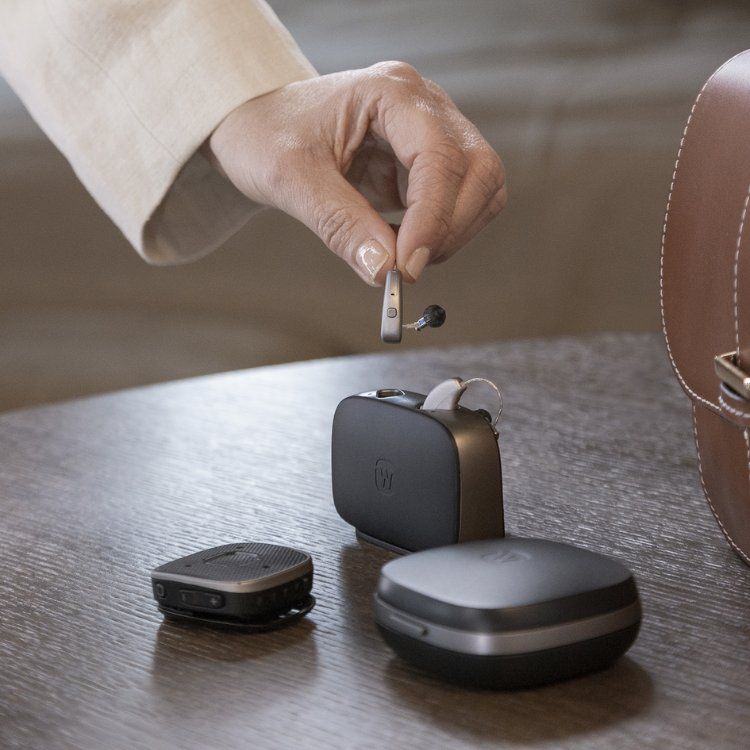
Dr. Aussem recommends the streamer, amplified phone, or alerting system that fits the specific problem, not a general-purpose catalog of options.
Get it set up
We help you get it working with your hearing aids and your home so whatever you take away actually gets used, not left in a drawer.
These work with your hearing aids, not instead of them.
Hearing aids carry most of the day, but some situations give even good ones trouble. The television across a room, a bad phone connection, a smoke alarm you sleep through with your hearing aids on the nightstand: these are distance and clarity problems, and a device built for that one job solves them more reliably than turning your hearing aids up.
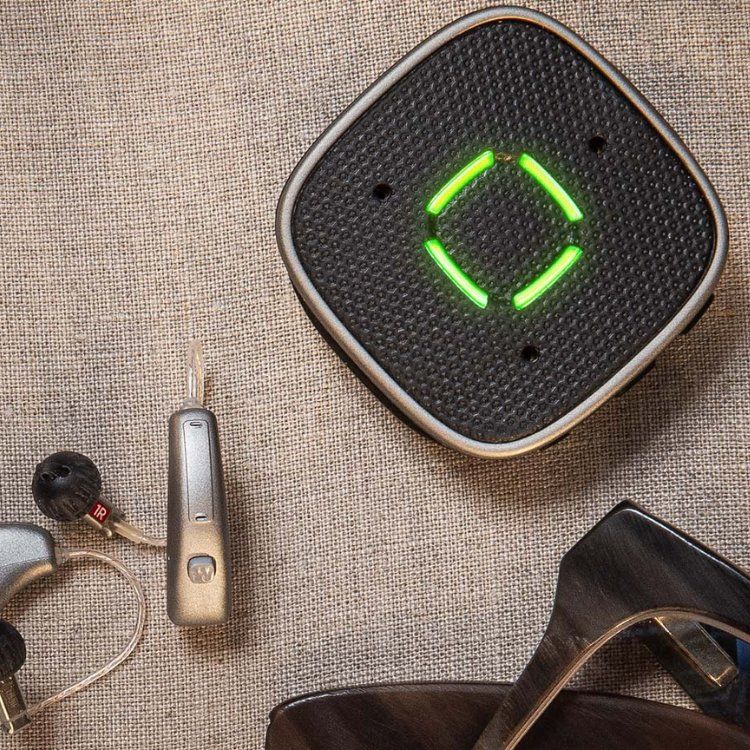
A TV streamer sends audio directly into your hearing aids; an amplified phone makes calls workable again; an alerting system uses a loud tone, a flashing light, or a bed shaker so a doorbell or alarm actually reaches you. Dr. Aussem recommends from the problem, not from a display case. If a device is not worth having for your situation, he will tell you.
For the moments hearing aids cannot reach on their own.
Assistive listening devices are single-purpose tools for situations that stay hard even with good aids in. Here are the everyday problems people most often bring in.
- The television: a streamer sends audio directly into your hearing aids so you catch the dialogue without the volume war
- The phone: amplified and captioned phones make landline and mobile calls workable again
- Missing the doorbell or a knock: alerting systems flag it with a loud tone or a flashing light
- Not hearing the smoke alarm with aids out at night: alarms with strobes and bed shakers add a meaningful safety layer
- Sleeping through your morning alarm: vibrating and extra-loud alarm clocks get you up reliably without waking others
- Meetings, lectures, and places of worship: personal amplifiers and loop systems help when distance gets in the way
Safety and independence live in the details.
It is easy to think of assistive devices as extras, until you realize how many of them are really about safety and staying independent at home. A person who cannot hear the smoke alarm with their aids out at night has a genuine gap, and a purpose-built alarm with a strobe and a bed shaker closes it. The same goes for the doorbell you keep missing, the phone call from family you can no longer quite follow, and the medication reminder you sleep through.
These devices also take pressure off your hearing aids. Cranking your aids to their limit so you can hear the TV makes the rest of the room too loud and wears you out by evening. Sending the television sound directly to your aids at a comfortable level, and letting a purpose-built device handle the doorbell, means your aids can stay set for the conversations they are actually best at. Each tool does the job it is built for.
Because Dr. Aussem sees every patient himself, he can match a device to the aids you already wear and the way your home is set up, rather than handing you a box and wishing you luck. He also offers mobile care for patients who have difficulty getting to the Glendale office, and runs clinics at senior living communities in the area, so if the office is not easy to reach, the care still is.
Good to know
Do these work with my hearing aids?
Many are designed to. Some stream audio directly into your hearing aids; others work independently alongside them. Dr. Aussem matches the device to what you already wear before making any recommendation.
Which device do I need?
It depends on where you struggle most. Tell Dr. Aussem about the hard moments and he will point you to the right tool, rather than walking you through a catalog of options that may not apply to your situation at all.
Do I need to already be a hearing aid patient?
No. Assistive listening devices are useful for people at any stage of hearing care. If you do not yet wear hearing aids, Dr. Aussem can assess whether they would also help during the same visit.
Can I try one before I commit?
Where we can make that happen, yes. It helps to know a device actually solves your frustration before you bring it home. Dr. Aussem would rather you be sure than end up with something sitting in a drawer.
Can Dr. Aussem come to me?
Yes. North Shore Hearing offers mobile care for patients who have difficulty getting to the Glendale office. Dr. Aussem also runs hearing clinics at senior living communities throughout the greater Milwaukee area.
Schedule an appointment at our Glendale office.
Call or send a message and we’ll help you schedule a hearing evaluation at our Glendale office. No pressure and no sales tactics, just a clear next step.
Glendale, WI 53217