
Complete testing, plain-language results.
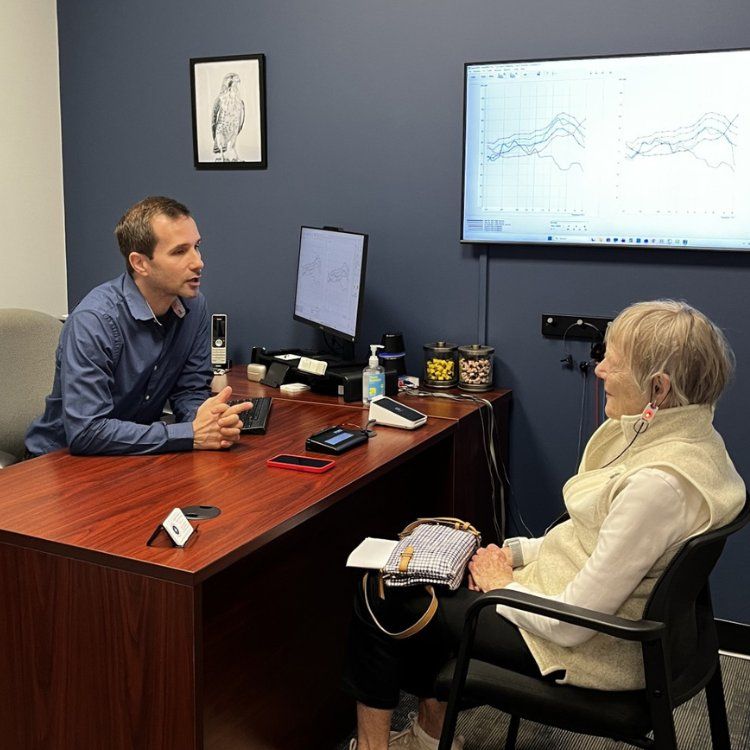
The evaluation covers your hearing from multiple angles, then Dr. Aussem walks you through what the results actually mean for your life.
Your history
We start with a conversation about your hearing concerns, medical background, and the situations where you notice the most difficulty day to day.
Comprehensive testing
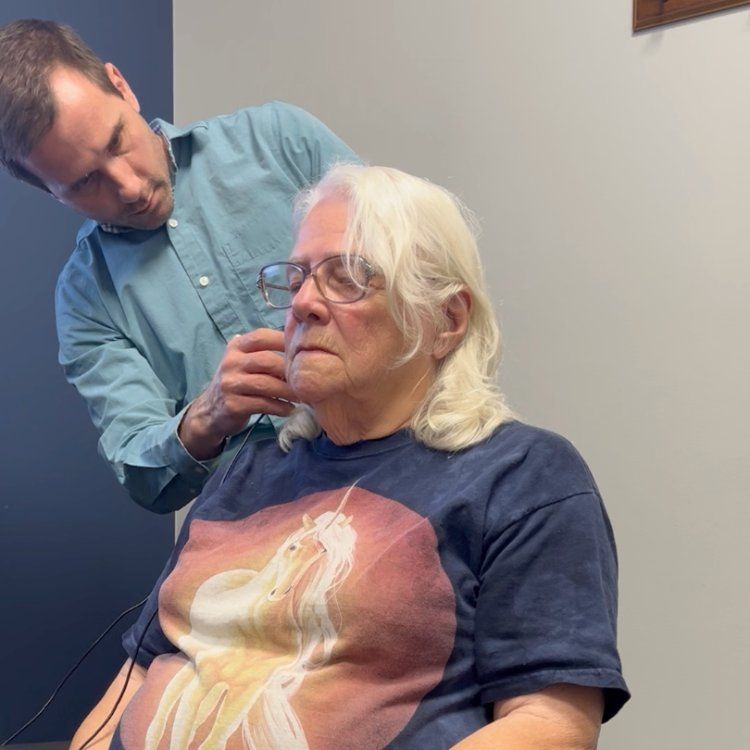
A series of standardized tests measures hearing sensitivity across frequencies, middle ear function, and how well you understand speech in quiet and in noise.
Clear results
Dr. Aussem walks you through your audiogram in plain language and outlines what the results mean, including any next steps that make sense for your situation.
There is a difference between a screening and a diagnostic evaluation.
A screening tells you whether you passed or failed a threshold. A diagnostic evaluation tells you how your hearing actually works: which frequencies are affected, by how much, in which ear, and how well you understand speech when it is competing with noise. That distinction matters when the next step involves hearing aids, tinnitus, or understanding why conversations have gotten harder.
Every evaluation is performed by Dr. Aussem, not a technician or retail associate. He interprets the results himself, explains them in plain language, and builds any recommendation around what the testing shows. If the results warrant a medical referral, he has an established physician network and will connect you with the right provider.
A hearing evaluation is the right starting point for all of these.
Whether you are noticing something for the first time or monitoring a known loss, the evaluation gives you the baseline every other decision is built on.
- First-time evaluation for someone noticing that conversations have become harder to follow
- Baseline testing before a hearing aid fitting or a refitting with new devices
- Monitoring a known hearing loss at regular intervals to track changes over time
- Evaluation alongside tinnitus to understand the connection between the two and guide management
- Sudden or one-sided hearing change that needs a prompt clinical baseline and follow-up plan
- Physician or specialist referral requiring a formal audiological assessment and documentation
Your audiogram is a map. It should be read by someone who knows the territory.
The numbers on an audiogram only tell part of the story. How well you understand speech in quiet is different from how well you understand it in noise, and neither of those captures how hearing loss is actually affecting your daily life. A thorough evaluation covers all of it, and the interpretation of those results is where clinical experience matters most. A number on a chart is not a recommendation. It is a starting point for a conversation.
Many people have their hearing checked at a retail chain or a big-box store and leave with a device recommendation and not much else. A diagnostic evaluation at an independent audiology practice is a different kind of appointment. The goal is not to confirm that you need hearing aids. The goal is to understand your hearing system accurately enough to guide whatever comes next, whether that is aids, monitoring, a medical referral, or simply reassurance that things are stable.
Dr. Aussem trained at the University of Wisconsin, Madison, and spent over a decade with the Department of Veterans Affairs before opening North Shore Hearing. That background means the evaluation is thorough, the results are explained in plain language, and the follow-up plan is based on what the testing shows rather than on what is easiest to recommend.
Good to know
Do I need a referral to schedule a hearing evaluation?
No. You can schedule directly without a physician referral. If your results point toward something that warrants medical follow-up, Dr. Aussem will connect you with the right provider through his established physician referral network.
How long does the evaluation take?
A full diagnostic evaluation typically takes about an hour. That includes the case history, all testing, and enough time afterward for Dr. Aussem to walk you through the results and answer your questions before you leave.
What does the evaluation involve?
The evaluation includes a review of your hearing history and concerns, a visual inspection of the ear canals, tests of hearing sensitivity across frequencies in both ears, middle ear function testing, and an assessment of speech understanding in quiet and in noise.
How often should I have my hearing tested?
For adults with no known hearing loss, every few years is generally reasonable. For those with a known loss or hearing aids, annual testing helps track changes and keep the fitting accurate. Dr. Aussem recommends an interval based on your specific situation.
What happens after the evaluation?
Dr. Aussem reviews the results with you before you leave and outlines any next steps. Depending on what the testing shows, those next steps might include hearing aids, a medical referral, a follow-up in a year, or simply a recommendation to monitor.
Schedule an appointment at our Glendale office.
Call or send a message and we’ll help you schedule a hearing evaluation at our Glendale office. No pressure and no sales tactics, just a clear next step.
Glendale, WI 53217