
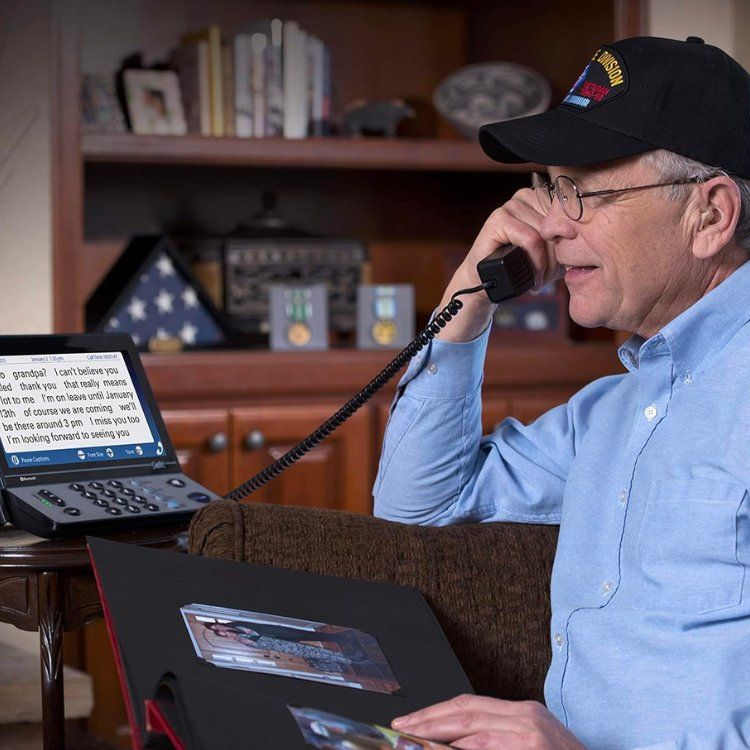
Tell us where calls break down.
The right caption phone depends on how you use the phone and what programs you qualify for, so we work through that with you first.
Where calls break down
We find out where phone calls go wrong for you, whether it is fast speakers, poor connections, or words you cannot catch without seeing them.
Match the device
Dr. Aussem identifies the right caption phone for your setup and checks whether you qualify for a device at little or no cost through available programs.
Get it working
We help you set the phone up, confirm the captions display properly, and make sure it works with your hearing aids if you wear them.
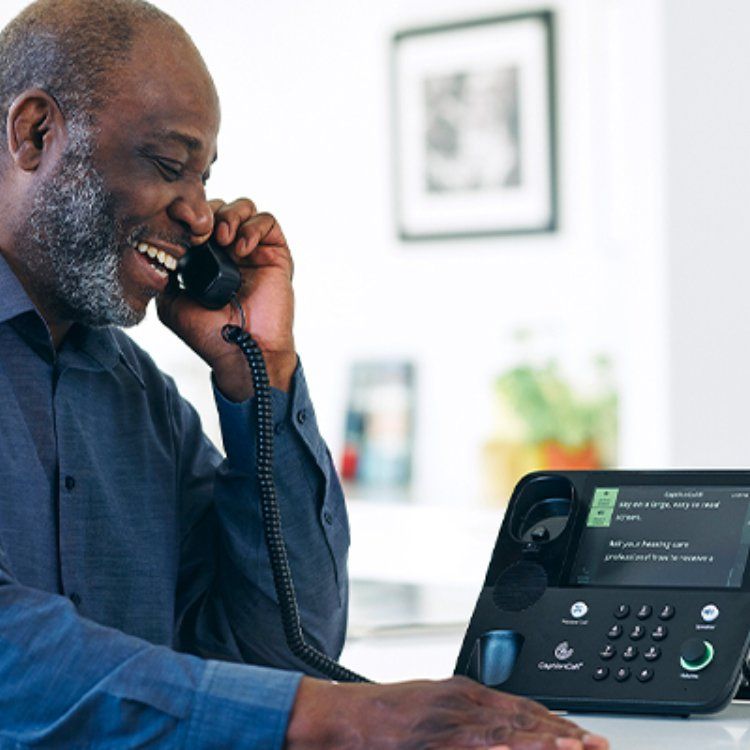
Captions do what volume alone cannot.
Volume helps when calls are simply too quiet. What makes them hard with hearing loss is usually clarity: a fast speaker, a bad connection, an unfamiliar accent, a doctor giving instructions you cannot easily ask to be repeated. Turning the volume up does not fix any of that. A caption phone adds a second channel. You still hear the call, and the words appear on a built-in screen as they are spoken, so you can read back what your ear missed.
Captions arrive in real time, generated by a live operator or voice recognition depending on the service. No separate tablet or computer needed. Most models work like any regular phone: pick up, dial, talk. Dr. Aussem checks what you already wear and how you use the phone before recommending a model, including whether one that streams directly into your hearing aids is the right fit.
For the calls that leave you guessing.
Caption phones address a very specific frustration. Here are the situations people most often bring in, and what a caption phone makes manageable again.
- Calls from doctors, pharmacies, and offices where asking someone to repeat themselves is not always an option
- Fast speakers, soft voices, and callers with accents that are difficult to follow even with hearing aids in
- Family calls you have started avoiding because keeping up has become too exhausting to enjoy
- Business and service calls where missing a single word or number has real consequences
- Emergency situations where understanding the call accurately and quickly matters most
- Late-day calls when listening fatigue makes following speech harder than it was in the morning
The phone is how most people stay connected. It should not feel like a hazard.
When phone calls become unreliable, people quietly stop making them. They ask someone else to call the doctor's office. They let calls go to voicemail and hope the message is clear enough. They nod along in conversations they cannot fully follow and assume they caught the important parts. This is a slow, invisible kind of withdrawal, and it compounds over time: the fewer calls you take, the less confident you feel on the phone, and the more reasons you find to avoid it.
Caption phones interrupt that pattern. They give you a backup for the moments your ear misses something, which means you can pick up the phone again without the anxiety of not knowing what you are going to miss. For people who live alone, that matters for safety. For people managing their own health care, it matters for accuracy. For anyone who values staying in touch with the people they care about, it matters in ways that are hard to overstate.
Because Dr. Aussem sees every patient himself, he can match a device to how you actually use the phone, confirm whether you qualify for programs that cover the cost, and make sure whatever you take home works alongside the hearing aids you already wear. If a caption phone turns out not to be the right fit for your situation, he will say so, and point you toward what is.
Good to know
Do I need hearing aids to use a caption phone?
No. Caption phones are useful whether you wear hearing aids or not. They provide a visual backup for anyone who struggles on the phone, regardless of how their hearing is otherwise managed.
How do the captions actually appear?
Captions are generated in real time as your caller speaks, either by a live transcription operator or by voice recognition software, and appear on the phone's built-in screen. You see the words arrive as the conversation unfolds, not after.
Do I need a special phone line?
Most caption phones require a home internet connection rather than a dedicated special line. If you have internet at home, you likely have what you need. Dr. Aussem confirms compatibility with your setup before making a recommendation.
How accurate are the captions?
Accuracy varies by service and connection quality. Human-assisted captioning tends to be very reliable; voice recognition captions may have occasional errors but are still useful for following along. The screen is a backup for what your ear missed, not a replacement for listening entirely.
Can I use a caption phone with my existing hearing aids?
It depends on the phone and the hearing aids. Some caption phones stream audio directly into compatible hearing aids. Others work independently and the hearing aids are worn separately. Dr. Aussem checks your specific combination before making a recommendation.
Schedule an appointment at our Glendale office.
Call or send a message and we’ll help you schedule a hearing evaluation at our Glendale office. No pressure and no sales tactics, just a clear next step.
Glendale, WI 53217